

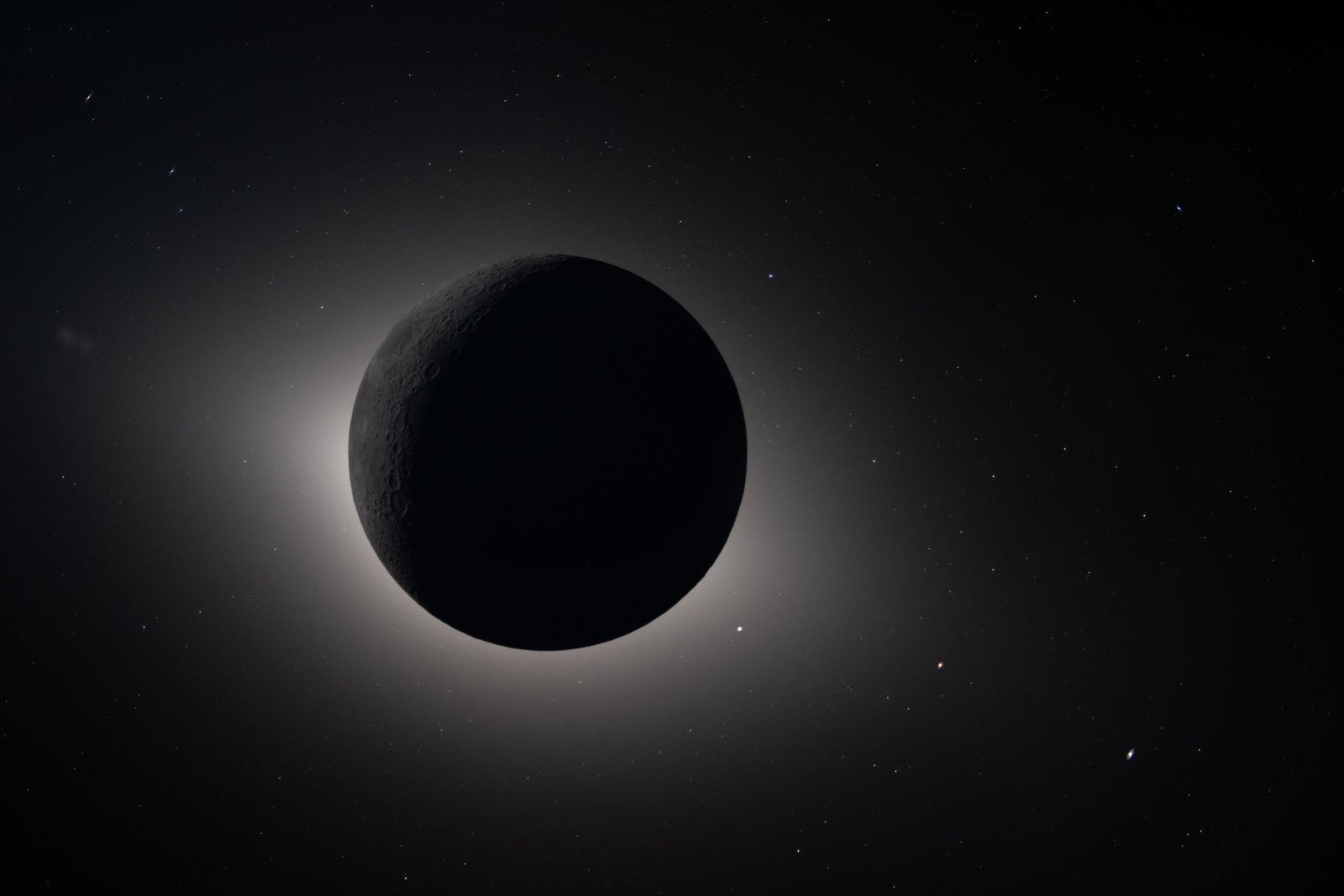

On April 6, 2026, four humans did something no one has done in over fifty years: they rounded the far side of the Moon. But as the Orion spacecraft, Integrity, arced through the silence of deep space, the mission became about much more than breaking records. It became a profound moment of human discovery, filled with trembling voices, "sci-fi" views, and a celebratory spirit that has ignited the world.
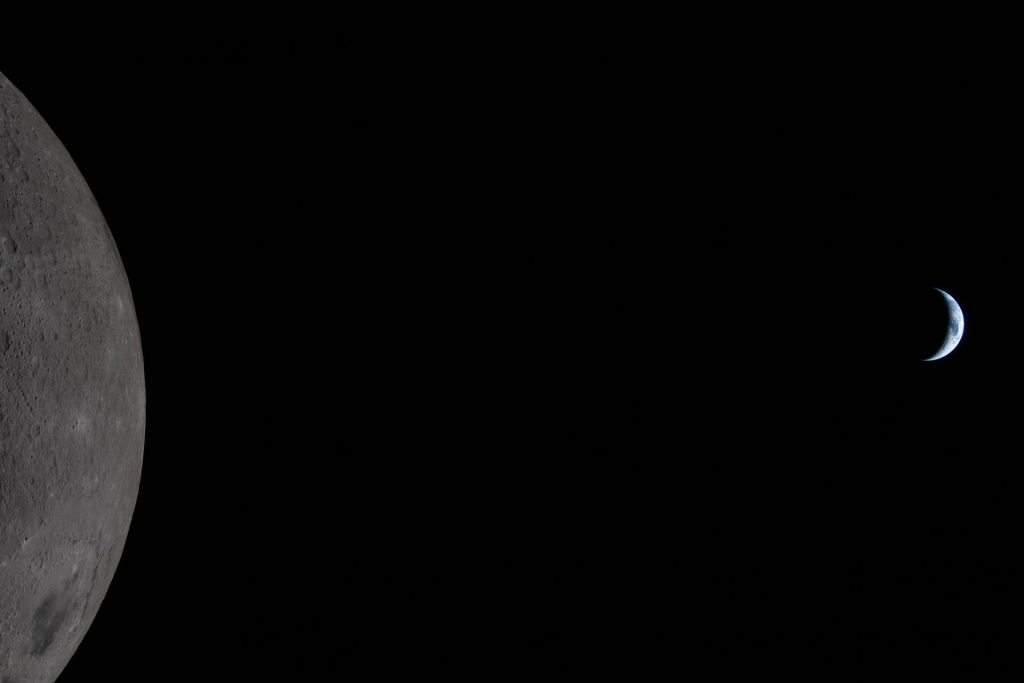
art002e009284 (April 6, 2026) – Earth appears tiny as the Moon looms large in this photo taken by the Artemis II crew during their lunar flyby on April 6, 2026. Taken 36 minutes before Earthset, our home planet is visible in the blackness of space off the limb of the illuminated Moon. Earth is in a crescent phase, with sunlight coming from the right. Orientale mare basin, with its dark floor of cooled lava and outer rings of mountains, covers nearly the lower third of the imaged lunar surface. Different colors in the mare hint at its mineral composition. The lines of small indentations above Orientale are secondary crater chains, formed by material ejected during a violent primary impact. Both of the new craters that the Artemis II crew has suggested names for – Integrity and Carroll – are in full view. The edge of the visible surface of the Moon is called the “lunar limb.” Seen from afar, it almost looks like a circular arc – except when backlit, as in other images captured by the Artemis II crew.
Image Credit: NASA
A Record-Breaking Leap
The journey was historic from the moment the crew surpassed the distance record set by Apollo 13, eventually reaching a staggering 252,756 miles from Earth. For the first time, humans were seeing the rugged, heavily cratered far side of the Moon with their naked eyes under full sunlight, a view that even the Apollo astronauts never witnessed in quite this way.
Jeremy Hansen described the Moon as looking like a "basketball held at arm's length," noting that "it is blowing my mind what you can see with the naked eye... it is just unbelievable.".
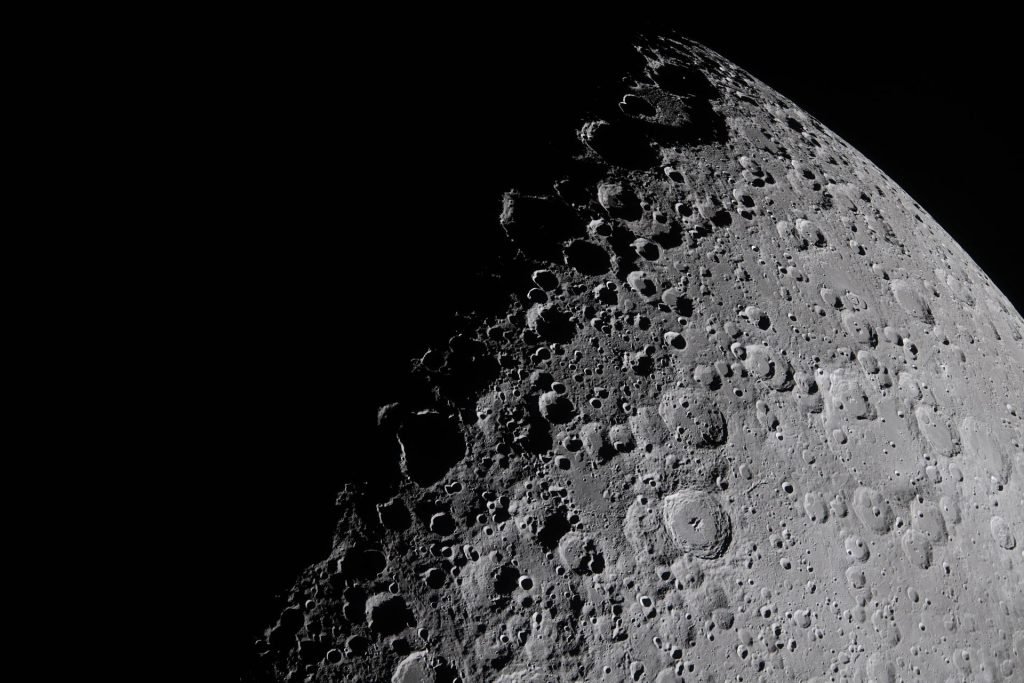
art002e009281 (April 6, 2026) – The Artemis II crew captures a portion of the Moon coming into view along the terminator – the boundary between lunar day and night – where low-angle sunlight casts long, dramatic shadows across the surface. This grazing light accentuates the Moon’s rugged topography, revealing craters, ridges, and basin structures in striking detail. Features along the terminator such as Jule Crater, Birkhoff Crater, Stebbins Crater, and surrounding highlands stand out. From this perspective, the interplay of light and shadow highlights the complexity of the lunar surface in ways not visible under full illumination. The image was captured about three hours into the crew’s lunar observation period, as they flew around the far side of the Moon on the sixth day of the mission.
Image Credit: NASA
The "Sci-Fi" Reality: Eclipse and Earthset
As Orion slipped into the Moon's shadow, the crew experienced something few humans in history have ever seen: a total solar eclipse from lunar orbit. For nearly an hour, the Sun's corona glowed behind the black disk of the Moon while stars and planets like Mars, Saturn, and Neptune glinted brightly in the velvet dark.
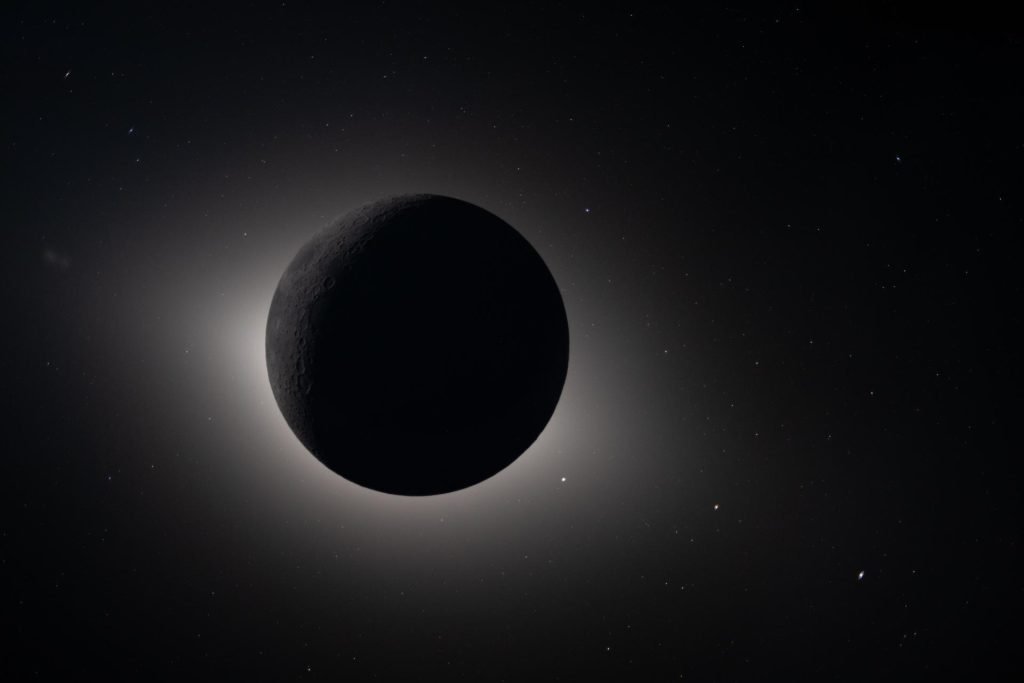
art002e009301 (April 6, 2026) – Captured by the Artemis II crew during their lunar flyby on April 6, 2026, this image shows the Moon fully eclipsing the Sun. From the crew’s perspective, the Moon appears large enough to completely block the Sun, creating nearly 54 minutes of totality and extending the view far beyond what is possible from Earth. The corona forms a glowing halo around the dark lunar disk, revealing details of the Sun’s outer atmosphere typically hidden by its brightness. Also visible are stars, typically too faint to see when imaging the Moon, but with the Moon in darkness stars are readily imaged. This unique vantage point provides both a striking visual and a valuable opportunity for astronauts to document and describe the corona during humanity’s return to deep space. The faint glow of the nearside of the Moon is visible in this image, having been illuminated by light reflected off the Earth.
Image Credit: NASA
Pilot Victor Glover was moved by the "magic" of the lunar terminator, the line where light meets dark, describing the craters as "bottomless holes" and "islands of light.". Struggling to find words, he radioed back to Earth, "Humans probably have not evolved to see what we're seeing... it just looks unreal. We just went sci-fi.".
Moments later, they witnessed a breathtaking "Earthset," watching our home planet, a fragile, blue crescent sink below the desolate lunar horizon. Christina Koch spoke of the "preciousness" of that sight, noting how the "overwhelming sense of being moved" made the lunar landscape suddenly feel "real.".
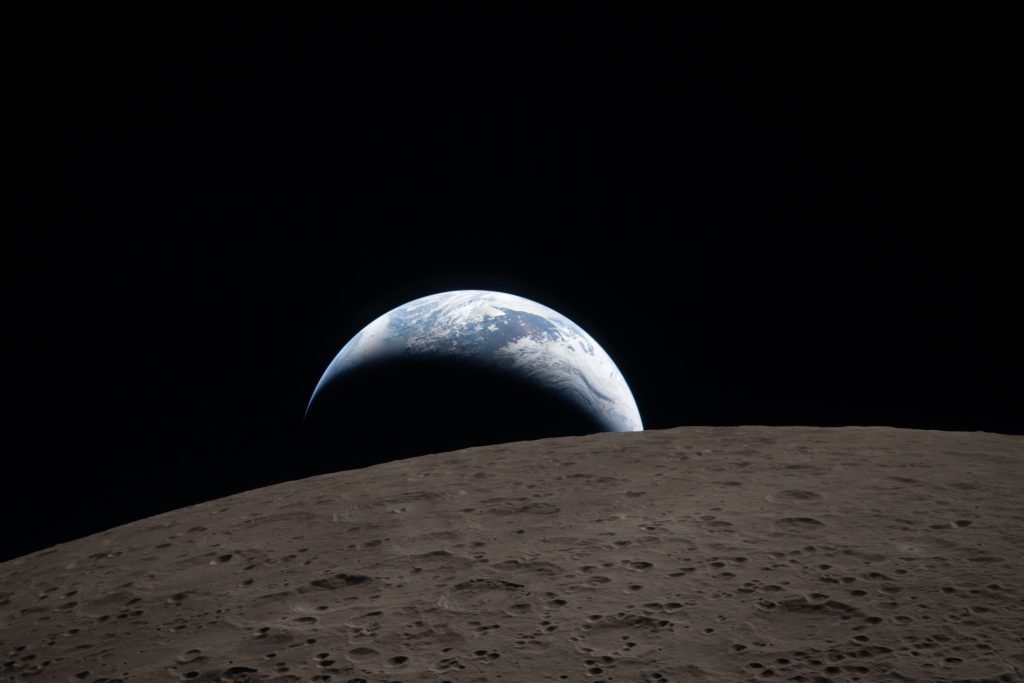
art002e009288 (April 6, 2026) – Earthset captured through the Orion spacecraft window at 6:41 p.m. EDT, April 6, 2026, during the Artemis II crew’s flyby of the Moon. A muted blue Earth with bright white clouds sets behind the cratered lunar surface. The dark portion of Earth is experiencing nighttime. On Earth’s day side, swirling clouds are visible over the Australia and Oceania region. In the foreground, Ohm crater has terraced edges and a flat floor interrupted by central peaks. Central peaks form in complex craters when the lunar surface, liquefied on impact, splashes upwards during the crater’s formation.
Image Credit: NASA
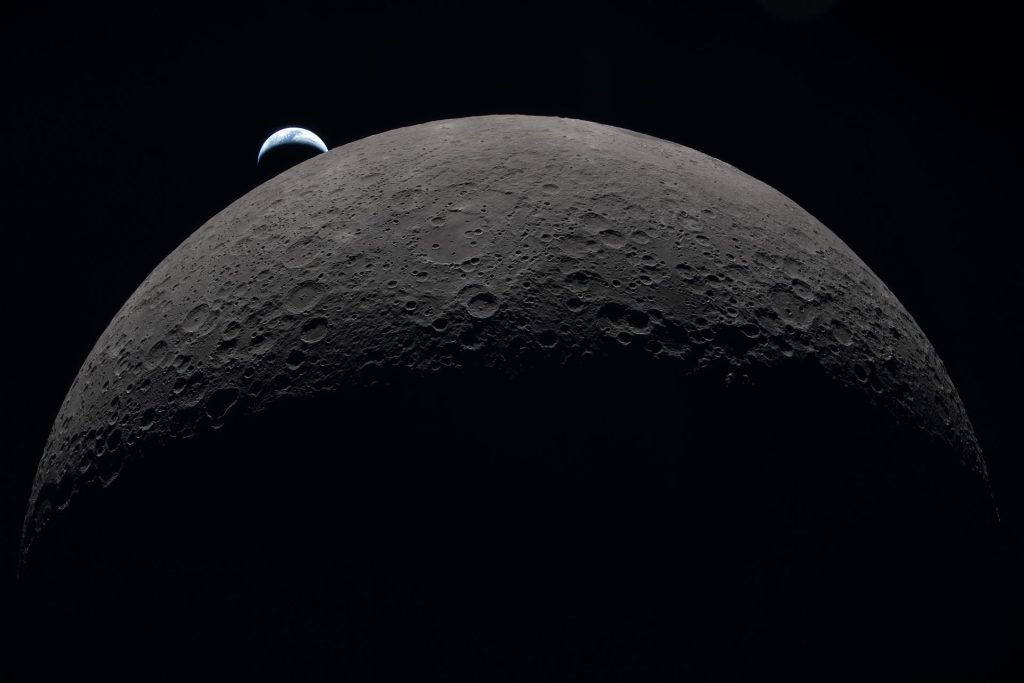
art002e009287 (April 6, 2026) – Earth sets at 6:41 p.m. EDT, April 6, 2026, over the Moon’s curved limb in this photo captured by the Artemis II crew during their journey around the far side of the Moon. Orientale basin is perched on the edge of the visible lunar surface. Hertzsprung Basin appears as two subtle concentric rings, which are interrupted by Vavilov, a younger crater superimposed over the older structure. The lines of indentations are secondary crater chains formed by ejecta from the massive impact that created Orientale. The dark portion of Earth is experiencing nighttime. On Earth’s day side, swirling clouds are visible over the Australia and Oceania region.
Image Credit: NASA
A Celebration of Humanity
The mission was not just a technical triumph; it was deeply personal. In a moment that left both the crew and Mission Control in tears, the astronauts proposed naming two fresh craters they discovered:
- Integrity: After their spacecraft.
- Carroll: In honor of Commander Reid Wiseman's late wife, Carroll, who passed away in 2020.
Back on Earth, the "Artemis Generation" shared in the joy. At Mission Control, scientists broke into "audible screams of delight" when the crew reported seeing real-time flashes of meteorites impacting the lunar surface, a discovery that happened purely by chance.
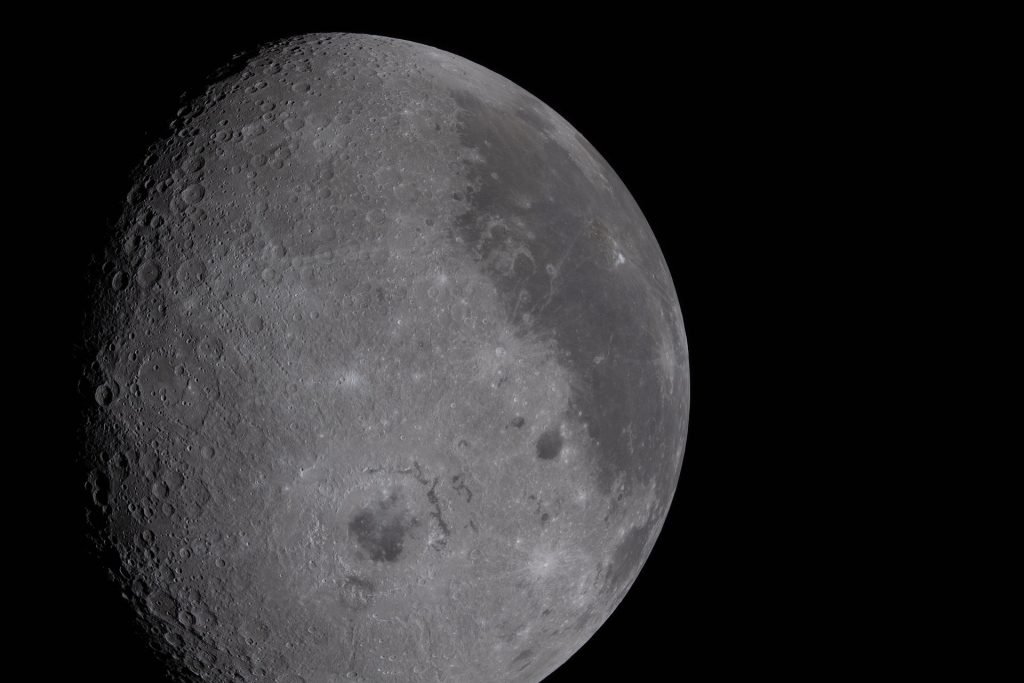
art002e012183 (April 6, 2026) - On the first shift during the lunar flyby observation period, the Artemis II crew captured more than two-thirds of the Moon showcasing the intricate features of the nearside. The 600-mile-wide impact crater, Orientale basin, lies along the transition between the near and far sides and is sometimes partly visible from Earth. The round black spot northeast of Orientale is Grimaldi crater, known for its exceptionally dark mare lava floor and heavily degraded rim.
Why These Photos Matter
While the high-definition 4K and 8K images released by NASA are already going viral, they represent something deeper than just pretty pictures. They are proof of our progress toward becoming a "two-planet species.". The mission's success is a celebration of human curiosity and the courage to look back at our home from the "other side.".